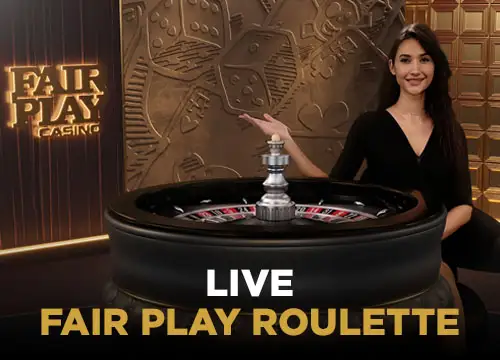
Fair Play Live Casino: Live Tables

Discover live tables at Fair Play Casino in Netherlands: how to start, manage your budget, and play responsibly in 2026.

Play Now!
Slot Fortune Gems 2

Table of contents

  • The Dog House Megaways Slot
  • Lucky Joker 10 Extra Gifts Slot
  • Sword of Ares Slot
  • Floating Dragon Hold & Spin Slot
  • Leprechaun Riches Slot
  • Fruit Coctail Slot
  • The Dog House Megaways Slot
  • Sword of Ares Slot
  • Fruit Million Slot
  • The Dog House Megaways Slot
  • Fruit Box Slot
  • Big Fisherman Slot
  • Seven Books Unlimited Slot
  • Fair Play Casino Fortune Slot
  • Sword of Ares Slot
  • Floating Dragon Hold & Spin Slot
  • 9 Mad Hats Slot
  • Floating Dragon Hold & Spin Slot
  • Big Bass Splash Slot

Fair Play Live Casino In Netherlands: How It Works

Live play is about rhythm and visibility. Instead of rapidly clicking, you see a real table, a dealer, and a clear round structure: betting, waiting, outcome. Imagine that after work you have twenty minutes left and you want something that feels like a night out, but without putting on a coat. You choose a table, watch one round, and only then do you bet - that pace prevents many impulse games.

Play Now!
live 1

What you practically notice: you get a betting window with a countdown timer, an overview of minimum and maximum bets, and often a history of recent rounds. It's not meant to guide you, but to make your choices transparent. Many players appreciate this, because you don't "accidentally" play three rounds in a row - you consciously confirm each time.

In 2026, the live offer is also broader: multiple tables, different speeds, sometimes variants with extra betting options. That sounds like more choice, but it can also create noise. A simple approach helps: first choose your betting level, and only then the table. If your budget is small, a high minimum bet makes little sense, no matter how inviting the table seems.

It's important to stay sober: live tables are entertainment, not a plan to "win back" money. Play with a fixed limit, take breaks, and stop when you notice you're making decisions faster than you actually want to.

Registration, Verification, and Safe Start

A good session doesn't start at the table, but with your account settings. If you play in the Netherlands, you want your profile to be correct and that you don't get stuck later when withdrawing. Imagine that precisely at the moment you want to cash out, you still have to search for documents, retake photos, and meanwhile become impatient. That's the kind of stress that often pushes players back into the games - and you can prevent that.

Play Now!
live 2

Complete your account with consistent data, and check that your name and date of birth are the same everywhere. Also, keep the basic rule in mind: playing is only for adults (18+). That doesn't just mean "checking a box", but also acting practically: log out on shared devices, set a PIN on your phone, and don't just save payment details in a browser used by others.

Verification is usually smoothest if you do it early. A sharp photo, good lighting, all edges visible - done. If something is rejected, don't ask "why doesn't it work?", but "which detail is missing or unreadable?". That one difference in questioning often saves multiple back-and-forth messages.

Also, think about your own limits. Set limits if they are available, plan a maximum duration, and choose a moment to stop that is not dependent on emotion. Many players resolve: "I'll stop after a win." But what if that win doesn't materialize? A pre-chosen endpoint works better than a promise to yourself.

live 3

Choosing Live Tables: Rhythm, Limits, Etiquette

The biggest mistake is thinking that all tables are the same. They look similar, but your experience is determined by three things: minimum bet, pace, and peace of mind. Imagine opening a table with a minimum that is actually too high for your budget. You will then automatically increase your bets faster or "just push through", and that's exactly where it goes wrong.

Play Now!

Therefore, first choose your playing style. Do you want to watch calmly and bet occasionally? Choose a table with a slower rhythm. Do you want short sessions with clear rounds? Then a faster pace suits you, but only if you don't feel pressured to click. The goal is not the most popular table, but the table where you can stick to your plan.

Etiquette is simple: keep it respectful, only use the chat if it doesn't distract you, and don't argue if you're annoyed. Playing live can be very relaxing, but only if you don't rush yourself.

Understanding Table Limits And Pace

Limits are your guardrail. You usually see a minimum and maximum, and sometimes extra limits per betting option. Imagine starting with a small budget and wanting to play ten rounds to get a feel for the game. With a low minimum bet, that's possible; with a high minimum bet, every round immediately becomes "loaded."

Pace works the same way: a short timer forces quick decisions, a longer timer gives room to breathe. If you notice that right after placing a bet you think "this wasn't my plan," then the pace is too high or you are too tired. In that case, choose a quieter table or stop for the day.

Setting Your Budget Before You Start

A budget is not just an amount, but also a way of playing. It usually works well to divide your total session budget into small fixed bets, so you don't improvise per round. Imagine you have a few unfavorable rounds and you want to "just compensate." If your bet is already fixed, that temptation is smaller.

Make it concrete: choose a maximum bet per round, decide approximately how many rounds you want to play, and set a timer. It sounds strict, but it actually provides peace of mind. You don't have to constantly renegotiate with yourself.

Adjusting Video And Connection For Stability

Live tables depend on your connection. You don't need to get technical, but you do want stable video and controls. Imagine the image flickering just as you want to place a bet: you lose track and start clicking by feel.

Therefore, check before you start: watch one round without betting, adjust video quality if your network fluctuates, and close apps that use a lot of data in the background. If you're playing mobile, don't start with your battery at 5% - that leads to haste and bad choices.

Smart Use of Chat And Interaction

The chat can be pleasant, but it can also become noise. Imagine typing a message, the timer running out, and just confirming something you didn't want to in time. Those kinds of "small mistakes" feel the bitterest in retrospect.

Only use the chat if you notice it makes you calmer. If not: mute it or ignore it. Live play is not a social obligation, but a form of gaming where focus is often your best friend.

Fair Play Casino Poker: Table Choices And Habits

Poker requires a different mindset than live tables with fast rounds. You stay in a hand longer, you think further ahead, and you deal with variations in opponents. Imagine switching directly from a fast table to a poker table without adjusting your pace. You'll play too fast, call too often, and stop too late.

Therefore, start with clarity: what type of game are you looking for, how much time do you have, and what bet suits your budget? Poker is not a sprint. It's a series of decisions that only "add up" later. That's why in 2026 you will increasingly see players who make their sessions shorter, but plan them more strictly: fixed duration, fixed buy-in, and stopping without drama.

Also important: don't expect magic tricks. A few simple habits do more than complicated theory: note your limits, play fewer hands when you're tired, and take breaks before you feel tilt coming on.

Cash Game Or Tournament Format: What Suits You

The main difference is flexibility. In a cash game, you can stop faster; in a tournament format, you are often tied to the structure. Imagine you only have half an hour, but you sign up for something that could last longer. Then your session becomes stress, not relaxation.

So choose wisely. Do you have a short time? Then something you can finish at any moment is a better fit. Do you have a quiet evening? Then you can choose a format that requires more patience. Whatever you choose: make one rule sacred - when your planned end time arrives, you close, even if you are "just having a good run."

Position, Bet Sizes And Patience In Practical Terms

You don't need to follow a complicated scheme to play wisely. Think of three simple questions per hand: where am I, how big is the pot, and what do I want to achieve with this bet? Imagine playing a hand out of boredom that you would normally fold, just because you "haven't done anything in a while." That's exactly where your money leaks away.

Prefer quality over activity. Play fewer hands, but play them more consciously. Keep your bets consistent so you don't accidentally swallow up your budget with big jumps. And if you notice yourself starting to chase losses, step away. One break is cheaper than half an hour of tilt.

Stopping Points And Emotions: How To Stay In Control

The hardest part is not learning to play, but learning to stop. Imagine you just lose an annoying hand and you think: "just one more to fix it." That one often becomes three, and then your plan is gone.

Therefore, make it simple: a stop at a certain loss amount, a stop at a certain win amount, and a stop at a time limit. If one of these three is hit, you're done. And if you find yourself still sitting there, use a hard break: timeout, adjust limits, or simply log out and put your phone away.

Depositing, Withdrawing And Administration Without Stress

Paying is not an exciting part, but it does determine how relaxed you play. You don't want to doubt if your deposit went through halfway through your session, or have uncertainty about your withdrawal afterwards. Imagine you see your balance, you want to finish, but you become unsure because you've used too many payment methods interchangeably. That kind of chaos is avoidable with one simple approach: consistency.

Choose one main method, make a small test deposit, and keep your transactions organized. Don't constantly change methods "to see what's faster." Often, this actually leads to extra checks, and then you're worse off.

The table below helps structure the most common moments without getting bogged down in details.

Practical Aspect

What To Pay Attention To

What To Do In Case of a Blockade

Deposit

Amount, confirmation, daily limit

Wait a moment, check your limits, ask support for the transaction status

Withdrawal

Profile complete, data consistent

Provide requested documents, do not change methods in between

Limits

Session budget, maximum bet, duration

Lower bet, take a break, activate a temporary blockade

Overview

Date, amount, status per transaction

Note the details, check notifications, ask one targeted question to support

Choosing Payment Methods Without Hassle

The best choice is often the simplest: a method you already trust and that fits your budget. Imagine you see five options and you randomly choose the first, without checking if there's a daily limit. Then you'll be puzzling later when you actually want to play or stop.

Start with a small amount, confirm it works, and only increase it if your session plan requires it. Also, consider your own behavior: if you know you can become impulsive, don't deposit more than you decided beforehand. A small friction can actually help here.

Withdrawal Requests Step By Step

A withdrawal usually goes smoothest if you do everything calmly and don't change anything 'in between'. Imagine submitting a request, and then immediately changing your payment method out of impatience. That can cause extra checks and slow down your own process.

First, check if your profile is correct, submit the request, and only later re-check the status. If you contact support, provide exact details: amount, date, method, and the status you see. This way, you'll get an answer that truly helps you move forward.

Using Limits, Timeouts, and Self-Exclusion

These tools are not a punishment, but a button to protect yourself. Imagine you notice you're betting faster than you actually want, because your evening isn't going well. Then a short break is often the smartest move of the entire session.

Use limits for deposits, restrict your maximum bet, and plan a fixed break. And if you notice you repeatedly return when you don't want to, consider a longer break or self-exclusion. That's not weakness, but mature control - especially since these types of games are only intended for 18+.

Contacting Support With the Right Information

Support is most effective when your question is clear. Imagine writing: 'it doesn't work', without context. Then you'll usually get follow-up questions first, and that takes time.

Rather write: 'My withdrawal has status X since date Y, amount Z, via method A. Which step is missing?'. Also, add your device and the time of the problem if it concerns live video or operation. The more specific you are, the faster you'll get a useful solution.

Mobile Gaming In 2026: Small Setup, Big Difference

Mobile is convenient, but mobile is also full of distractions. Notifications, battery, fluctuating connection - these are small things that influence your decisions. Imagine wanting to catch a few rounds on the train and a notification pulls you out of the screen. You come back, you miss the moment, and you then play hastily.

Therefore, make your session 'mobile-proof'. Turn on 'do not disturb', close apps that demand your attention, and ensure your connection is stable before you start. Keep your bets simpler than on desktop, switch less between tables, and choose calm over speed. In 2026, it's normal to play short and controlled: ten minutes focused, then stop.

And don't forget your own limits. If you notice that you become impulsive faster on mobile, lower your maximum bet and set a shorter timer for your session. This way, it remains entertainment, not an automatic reflex.

Quick Checklist For A Calm Session

A short checklist makes the difference between relaxed playing and messing around. Imagine doing everything 'quickly': your battery is low, your Wi-Fi fluctuates, and you still have three chats open. Then you'll make mistakes, period.

Therefore, do this: turn off notifications, check your balance and session budget, watch one round before betting, and decide beforehand when you will stop. If you notice after a few minutes that you're getting irritated, take a break or log out. The best time to stop is often sooner than you think.

FAQ

Choose an amount that fits your weekly budget and set it before you start, not during play. Ask yourself one simple question: 'If this amount is gone, will I still sleep peacefully?' If the answer is no, your limit is too high. Where possible, use a deposit limit or a time limit and combine it with a timer on your phone. It also helps to divide your session budget into small fixed bets, so you don't improvise after a few disappointing rounds.

Stop immediately and take a real break, not a break where you keep watching in the meantime. You recognize tilt by faster clicking, higher bets without a plan, and thoughts like 'I need to win this back'. Put your phone away, drink some water, and only come back when you're calm again. If this happens more often, use a timeout or structurally lower your maximum bet. The cheapest correction is almost always a timely break.

Ensure your profile data is consistent and your verification is in order before you play a big session. Take clear photos of any documents that may be requested, with good lighting and visible edges. Avoid changing your payment method while a withdrawal is pending, as this can trigger additional checks. If you do need to email or chat with support, immediately provide the amount, date, status, and method - that speeds up the solution.

Turn off notifications, close social apps, and only play when your connection is stable. First, watch one round or hand to check if the visuals and controls are smooth. Keep your sessions shorter than on desktop and plan a stopping point, for example, after a fixed number of rounds. If you notice you're on the go and your attention is scattered, don't continue playing - a short, controlled session is better than playing long with mistakes.

If you can't solve something with a simple check, such as reloading, testing the connection, or checking your transaction status, support is the next step. Don't wait for hours in frustration trying repeatedly without a plan. Formulate your question concretely: what do you see, since when, what amount, what status, what device. This way you avoid standard questions and get a faster answer that truly helps.

By building in calm: fixed stakes, fixed duration, and clear stopping rules. Play fewer different games in one session and don't constantly switch tables or formats. Watch a round more often before betting, so your pace and comfort are right. And use tools like limits or a timeout if you notice your plans falling apart. Playing better usually doesn't mean 'more risk,' but 'less chaos'.

Play Now